Behavior
Conduct extensive pain, sensory, motor, and cognitive behavioral testing.
Aggression is a multifactorial, naturally occurring behavior characterized by actions intended to dominate, defend, or eliminate a perceived threat. It is modulated by neurobiological pathways involving serotonin, dopamine, and androgenic signaling, and shaped by genetic predisposition, early life experience, and environmental stress. In animal models, aggression serves adaptive roles in territoriality, hierarchical structuring, and resource competition. The pig's neurobiological complexity and social repertoire make it a well-suited species for studying aggressive behavior and evaluating compounds intended to modulate it. MD Biosciences has developed a resident-intruder model of aggression in Göttingen minipigs that elicits and quantifies aggressive behavior under controlled, reproducible conditions.
MD Biosciences applies the resident-intruder paradigm, in which a resident Göttingen minipig is exposed to an unfamiliar intruder to elicit dominant and aggressive behavior. After establishing each animal's baseline response, residents are dosed with the test compound and re-exposed to the intruder, enabling a within-animal comparison of how a candidate alters aggression.
Encounters are video recorded and scored to quantify the duration and frequency of dominant and aggressive behavior. Open field and approaching tests provide complementary measures of locomotion and social response, helping distinguish a genuine reduction in aggression from nonspecific sedation.
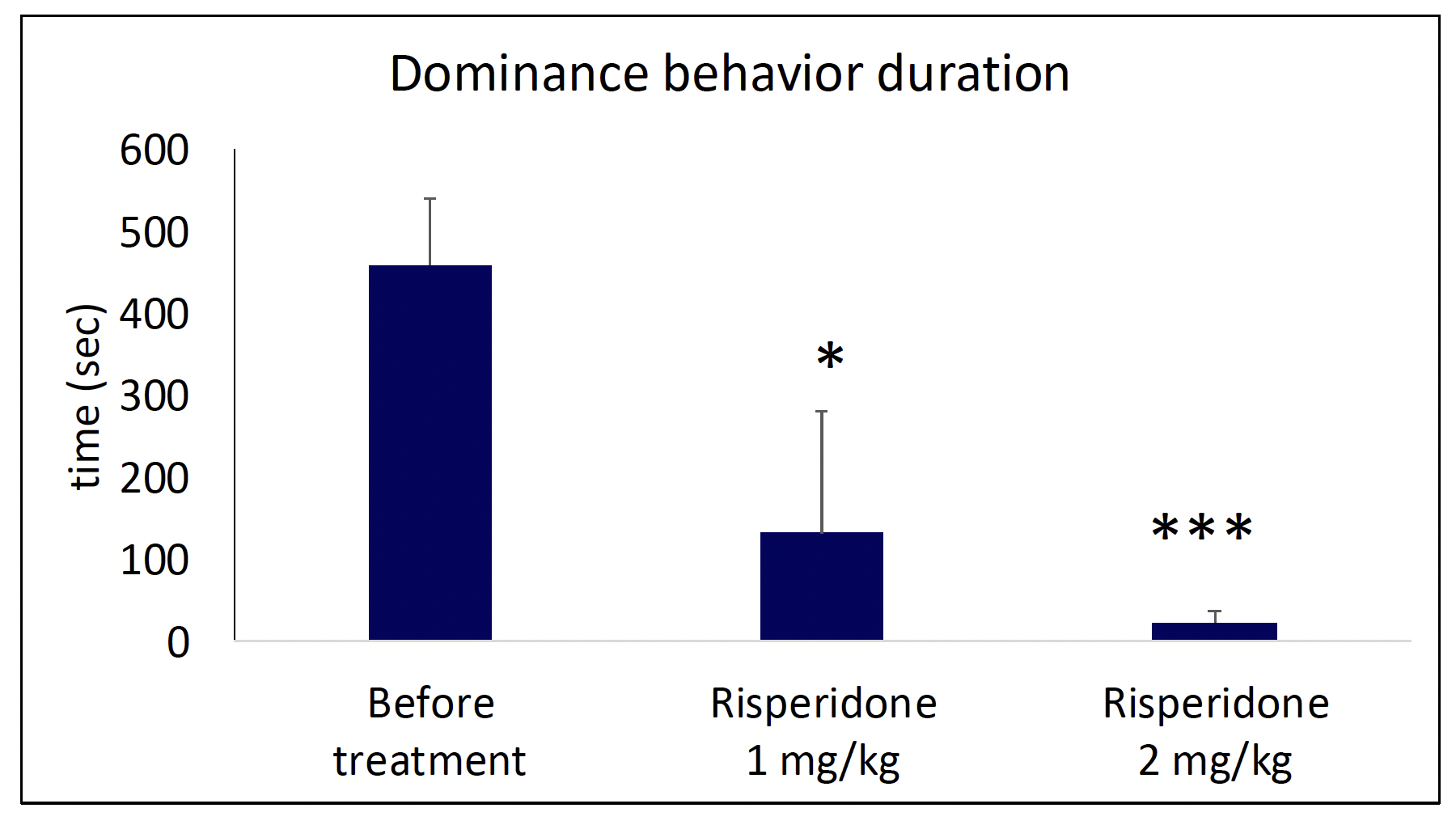
In a validation study, the antipsychotic risperidone produced a dose dependent reduction in the duration of dominant behavior during resident-intruder encounters, falling from approximately 460 seconds at baseline to roughly 135 seconds at 1 mg/kg and about 20 seconds at 2 mg/kg. The effect was statistically significant at both doses, demonstrating the model's sensitivity to a clinically used compound with known anti-aggressive activity.
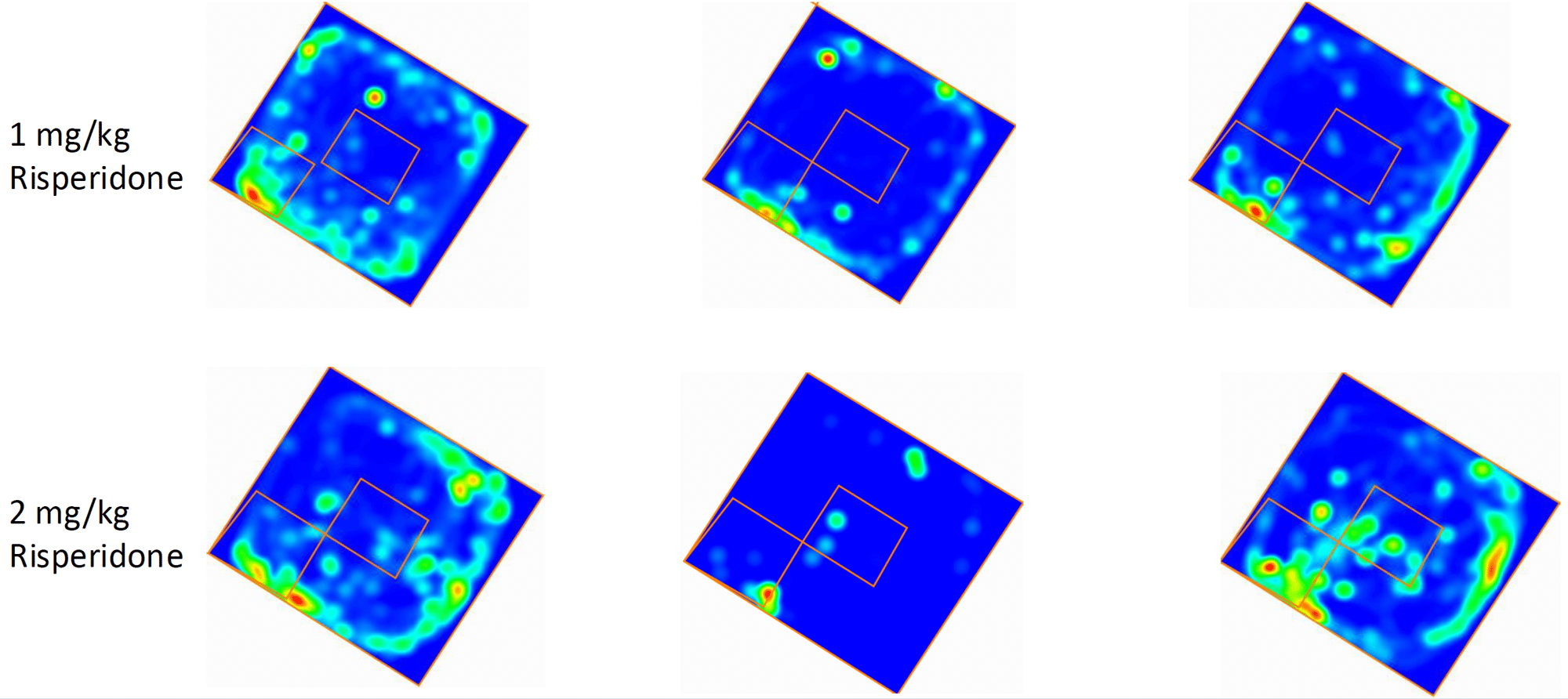
Open field testing was run alongside the behavioral scoring to characterize locomotion and separate a genuine reduction in aggression from general sedation. At 2 mg/kg, risperidone significantly reduced total walking distance and increased immobile time, while effects at 1 mg/kg were more modest, indicating that the lower dose can reduce aggressive behavior with a smaller impact on overall activity.
EXPLORE RESOURCESMD Biosciences offers comprehensive in vivo measures and endpoint assessments, delivering robust data packages to support critical research decisions in the evolving landscape of drug development and biomedical research.
Conduct extensive pain, sensory, motor, and cognitive behavioral testing.

Explore inflammatory and pain biomarkers in disease-specific tissues.
Characterize tissue and cellular changes in disease, pain, and neurodegeneration.
Measure motor and sensory evoked potentials to assess disease progression and pain.