Cuprizone Model of Demyelination and Remyelination

SPEAK WITH A SCIENTIST

mdbiosciences-neurology-leading-preclinical-CRO-1

Modeling Myelin Loss and Repair for Multiple Sclerosis

The cuprizone model is a well-characterized, toxin-induced model of central nervous system demyelination and remyelination, widely used in multiple sclerosis (MS) research. Unlike autoimmune models such as EAE, cuprizone produces demyelination without a primary peripheral immune response, allowing oligodendrocyte injury, myelin loss, and the subsequent repair process to be studied directly. This makes it especially well suited for evaluating remyelinating and neuroprotective therapies.

Speak with a scientist
 
Scientific Data

Quantitative Demyelination

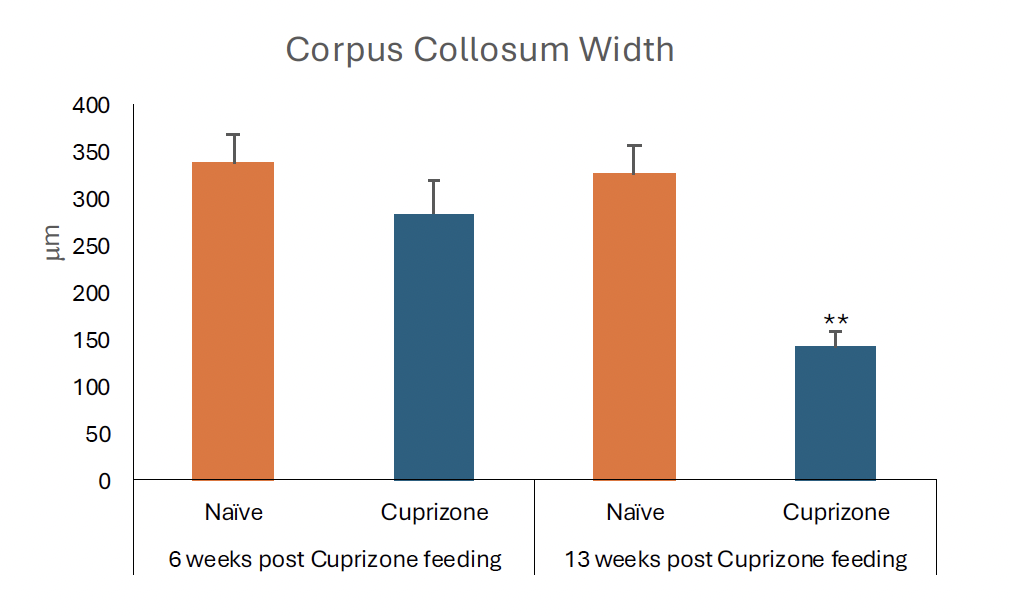
Corpus callosum thickness, measured from MBP-stained sections, is significantly reduced after 13 weeks of cuprizone exposure compared with naïve controls, providing a reproducible, quantitative readout of demyelination for evaluating therapeutic effect.


Assessments

MD Biosciences offers comprehensive in vivo measures and endpoint assessments, delivering robust data packages to support critical research decisions in the evolving landscape of drug development and biomedical research.

behavior

Behavior 

Conduct extensive pain, sensory, motor, and cognitive behavioral testing.

biomarker

Biomarkers

Explore inflammatory and pain biomarkers in disease-specific tissues.

histology

Histology

Characterize tissue and cellular changes in disease, pain, and neurodegeneration.

electrophysiology

Electrophysiology

Measure motor and sensory evoked potentials to assess disease progression and pain.

Explore our Resources

READY TO DISCUSS YOUR PROGRAM?

MD Biosciences is your dedicated partner in drug development, offering tailored study designs, translational models, and comprehensive endpoint assessments. With short lead times, competitive pricing, and deep scientific expertise, we help move your pipeline forward efficiently.

Request Proposal