


4 min read
Five Days From a Single Injection: What Long-Acting Local Anesthetics Have to Prove in the Pig
By: MD Biosciences on Sep 22, 2026, 11:00:01 AM
Postoperative pain management is in the middle of a reimbursement shift. Since January 2025, Medicare has paid separately for qualifying non-opioid pain management drugs and devices in outpatient surgical settings under the NOPAIN Act, a provision that runs through the end of 2027 and covers products including liposomal bupivacaine. The policy is one expression of a wider effort to reduce opioid exposure after surgery, and long-acting local anesthetics are one of several non-opioid approaches being developed for that purpose alongside peripherally acting analgesics, nerve blocks and neuromodulation devices. For formulation programs built around extending the duration of a local anesthetic, reimbursement policy now rewards the same property the science is chasing, multi-day coverage from a single intraoperative administration. The preclinical question is how to demonstrate that duration convincingly before a program commits to the clinic.
Why Duration Is Measured in the Pig
A long-acting local anesthetic is a formulation claim as much as a pharmacology claim. Bupivacaine and ropivacaine are decades old; what a sponsor is really testing is whether a depot, gel, or liposome releases drug at the wound site for days rather than hours. That test has to happen in tissue that handles the formulation the way human tissue will. Pig skin resembles human skin in thickness, hair follicle content, pigmentation, collagen, and lipid composition, and pig studies accommodate human-scale dose volumes, which matters when the product is two milliliters of gel instilled into a surgical site rather than a weight-scaled solution.
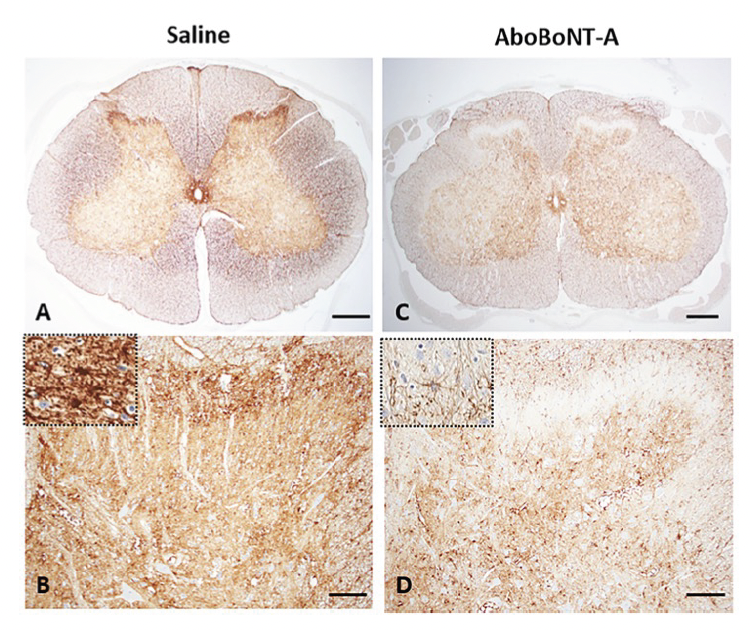
MD Biosciences runs two porcine post-operative pain configurations for this work. The flank incision model, in full skin or skin and muscle variants, suits local and topical products applied to the wound itself. The leg incision model places the incision in territory innervated by the sciatic nerve, so a treatment can be applied proximally by perineural injection, epidural or intrathecal injection, or DRG injection. In both, analgesia is read on von Frey testing, where an animal free of pain tolerates the maximum stimulus without reacting and an animal in pain withdraws at much lower force, alongside a distress behavior score and an approaching test. The same configurations are used for non-opioid candidates beyond local anesthetics. Botulinum toxin given intradermally at a skin and muscle incision reversed mechanical allodynia from day three, where the bupivacaine comparator had worn off within a day (Cornet et al. 2022), and opioid alternatives can be read for efficacy and behavioral safety in the same study.
What an Oleogel Bupivacaine Program Showed
An oleogel-based bupivacaine formulation was evaluated by both routes, local instillation into a lower lumbar incision and an ultrasound-guided sciatic nerve block (Wojtalewicz et al. 2024). In the incisional study, the high dose (2 mL, 108 mg) produced analgesia lasting roughly 120 hours, against approximately 12 hours for standard bupivacaine HCl. Across the two studies overall, the formulation extended analgesia by 2.8 days in the nerve block model and 3.5 days in the incisional model, with a dose-dependent response, and pharmacokinetic and histology data supported safety and acceptable wound healing.
For calibration, the established agents have already been characterized in both configurations. In the leg incision model, perineural Marcaine, Naropin, and Exparel all produce a complete, reversible nerve block, and in flank incision studies an AUC analysis of analgesic effect ranked Exparel above Marcaine and Naropin, an order that mirrors human postoperative data (Castel et al. 2017). A novel formulation entering this model is therefore measured against comparators whose clinical behavior is already known.
The Endpoints Beyond Analgesia
Duration data alone does not carry a long-acting anesthetic program, because the formulation stays in the wound for days and becomes part of the healing environment. Incision healing is assessed in-life and histologically in the same animals that provide the behavioral data, which is how the oleogel program was able to report its multi-day analgesia alongside evidence of acceptable healing. Pharmacokinetic sampling runs in parallel, since a depot that extends analgesia by slowing release should show prolonged plasma exposure rather than a high early peak.
The open field assay closes a specific interpretive gap. A pig that stops reacting to von Frey stimulation might be comfortable, or might be sedated by systemic drug exposure. Open field data on distance traveled, speed, and time in the central zone confirms the animals are moving normally, so the elevated withdrawal threshold reads as analgesia rather than impairment.
A program that arrives at its clinical entry meeting with behavioral duration, wound healing, systemic exposure, and locomotor data from the same animals has answered the questions a reviewer will ask in a species whose skin, dose volumes, and analgesic drug rankings track the human case. The models are run for whatever technology a program is built on; MD Biosciences works with small molecules, biologics, cell-based therapies, AAVs, medical devices and combination products across all administration routes. Study design discussions are welcome at neuro@mdbiosciences.com.
References:
Wojtalewicz S et al. 2024 (Drug Delivery and Translational Research). Oleogel-based bupivacaine (5.4%) in porcine incisional and sciatic nerve block post-operative pain models; approximately 120 hours of analgesia at the 2 mL, 108 mg dose in the incisional model versus approximately 12 hours for bupivacaine HCl; 2.8 and 3.5 day extensions in the nerve block and incisional models respectively; PK and histology supporting safety and acceptable healing. MD Biosciences co-authors Hifi, Castel, Meilin, Schauder.
Castel D et al. 2017 (Journal of Pain Research). Local analgesics in pig post-operative pain models; Exparel > Marcaine > Naropin by AUC analgesia, mirroring human postoperative data.
Cornet S et al. 2022 (Scientific Reports). AbobotulinumtoxinA in the pig skin and muscle incision and retraction post-operative pain model; reversal of mechanical allodynia from day 3 with normalized distress behavior, against a transient effect of bupivacaine. MD Biosciences co-authors Castel, Meilin, Horne.
Translational Model of Post-Operative Pain Datasheet, MD Biosciences (flank and leg incision model configurations; von Frey with 60 gram maximum force; behavior score, approaching time, open field; PK, safety, incision healing, cytokine and biomarker endpoints; perineural, epidural or intrathecal, and DRG routes in the leg model; complete reversible nerve block with Marcaine, Exparel, and Naropin).
Centers for Medicare & Medicaid Services, NOPAIN Act implementation (separate payment for qualifying non-opioid pain management drugs and devices in outpatient surgical settings, January 1, 2025 through December 31, 2027).