


3 min read
CIPN Keeps Failing in the Clinic. The Preclinical Package May Be Why.
By: MD Biosciences on Jun 9, 2026, 9:00:03 AM
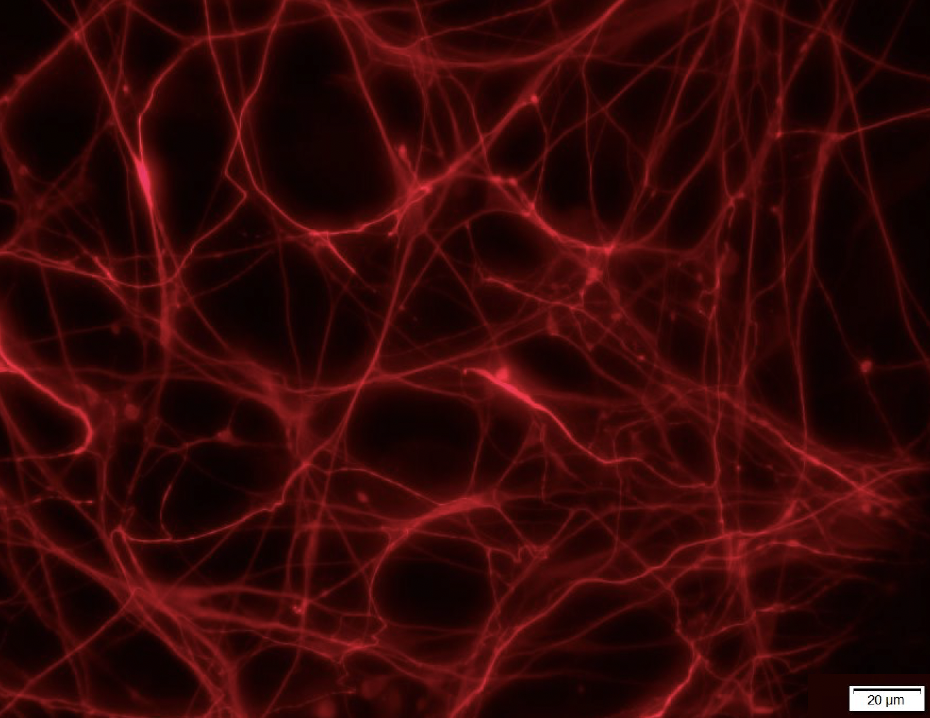
Chemotherapy induced peripheral neuropathy remains one of the most underserved symptoms in oncology supportive care. Estimates place the incidence at roughly 30 to 40 percent of patients treated with platinum compounds, taxanes, or vinca alkaloids, and for a meaningful subset the neuropathy persists long after treatment ends. Despite decades of work, there is still no drug approved specifically for the prevention of CIPN, and candidate after candidate has shown promising rodent efficacy only to falter in clinical trials.
There are many reasons CIPN programs struggle to translate. Dose scheduling differs between preclinical and clinical settings. Patient populations are heterogeneous. Outcome measures are subjective. But there is also a structural issue with the standard preclinical package, which tends to rely heavily on rodent models that cannot fully capture the neurobiology or the behavior that defines human CIPN.
What Rodents Can and Cannot Tell Us
Mouse and rat CIPN models, induced with cisplatin, oxaliplatin, paclitaxel, or bortezomib, have been workhorses of preclinical oncology pain research for years. They have taught the field a great deal about the molecular mechanisms of chemotherapy neurotoxicity, including mitochondrial dysfunction, sodium channel dysregulation, and inflammatory signaling in the dorsal root ganglion.
Where rodents run into trouble is in the downstream biology that matters most clinically. Rodent peripheral nerves are short relative to human peripheral nerves, which means the length dependent pattern of CIPN, where symptoms first appear in the fingers and toes and progress proximally, does not replicate cleanly in a rat hind paw. Rodents also rely on reflex based assays like von Frey and acetone drop, which capture evoked hypersensitivity but tell us relatively little about spontaneous dysesthesias, the persistent tingling and numbness that patients report as the most distressing aspect of CIPN. And the intraepidermal nerve fiber changes that accompany human CIPN, which are a primary histological signature of the disease, are difficult to quantify reliably in small rodent skin biopsies.
These are not reasons to abandon rodents. They are reasons to think carefully about where a second species adds value.
The Translational Case for Larger Species
The translational limitations of rodent CIPN models point toward a scientific rationale for larger species, even if validated large animal CIPN models are not yet standard in the field. Porcine peripheral nerves are considerably longer than those of rodents, which means the length dependent dying back pattern of CIPN can be recapitulated in a substrate that more closely resembles human nerve architecture.
Electrophysiology in pigs offers a further translational advantage. Sensory nerve conduction velocity (SNCV), compound muscle action potentials (cMAP), andsensory nerve action potentials (SNAP) are all recorded in the same animal, using techniques that translate directly to the electrophysiology used in clinical CIPN assessment. MD Biosciences pioneered the first cMAP and SNAP recordings in swine, and that electrophysiology capability is among the most direct preclinical to clinical readouts available in the field.
Pig skin is also structurally and functionally similar to human skin across thickness, hair follicle content, pigmentation, collagen composition, and lipid composition, supporting more reliable quantification of intraepidermal nerve fiber density changes — one of the primary histological signatures of human CIPN that is difficult to assess in small rodent biopsies. MD Biosciences has established cMAP and SNAP recording capability in swine for other pain indications, and the neurophysiological overlap between pig and human peripheral nervous systems has been formally characterized by Meijs et al. (2021, Lab Animal).
For programs seeking CIPN preclinical data now, MD Biosciences runs rodent CIPN models with cisplatin, paclitaxel, and oxaliplatin, incorporating behavioral endpoints, intraepidermal nerve fiber density histology using anti PGP9.5 immunohistochemistry, and the ChemoMorphometric Analysis platform for integrated quantitative skin biopsy analysis. That rodent package is where most CIPN programs start, and it remains the workhorse of preclinical neuropathy research.
Why the Translational Logic Holds Beyond Pain
Peripheral neurophysiology in pigs shows near complete overlap with human peripheral neurophysiology (Meijs et al., 2021, Lab Animal). For CIPN, where the disease is fundamentally about the peripheral nerve and its terminal fields in skin and muscle, that anatomical and neurophysiological alignment is not a luxury. It is the substrate on which clinical predictive validity rests.
This alignment is what has made porcine pain models unusually effective at predicting clinical outcomes in other pain indications. The same logic applies to CIPN. If a candidate is expected to preserve intraepidermal nerve fibers, improve nerve conduction, or blunt spontaneous pain behaviors, those effects should be observable in a species whose peripheral nervous system resembles the human target tissue.
Where This Fits in a CIPN Program
Not every oncology sponsor needs to go beyond rodents for CIPN. Early screening, target engagement, and mechanism of action studies are well served by rodent models. For candidates approaching IND, or for programs where rodent efficacy has failed to replicate in the clinic, the scientific case for adding a species with longer peripheral nerves, measurable nerve conduction, and skin histology consistent with human disease is strong — even if validated large animal CIPN models are not yet widely available. Understanding what that translational gap looks like is itself useful for planning.
The CIPN space is active. Drug developers in the neuropathy and oncology supportive care arena are working on candidates that will eventually need translational evidence beyond standard rodent readouts. For those programs, the question is how to build a preclinical package that gives the clinical trial the best chance of reading out positively, and that starts with a rigorous, well characterized rodent platform.
— — —
MD Biosciences operates translational CIPN models in rodents, with integrated behavioral, histological, and biomarker endpoints. For questions about CIPN study design or oncology supportive care programs, contact neuro@mdbiosciences.com.
Related Posts
Preclinical Human Pain Models. Translating to Clinic
Management of acute pain related to surgical intervention, termed postoperative pain, continues to...
Translating Preclinical Data to the Clinic
It's a question that comes up regularly, from scientists who contact us to publications to...
The NaV1.8 Era: What Journavx Means for Pain Drug Development
For the first time in over two decades, the FDA has approved a new class of pain medication. Vertex...