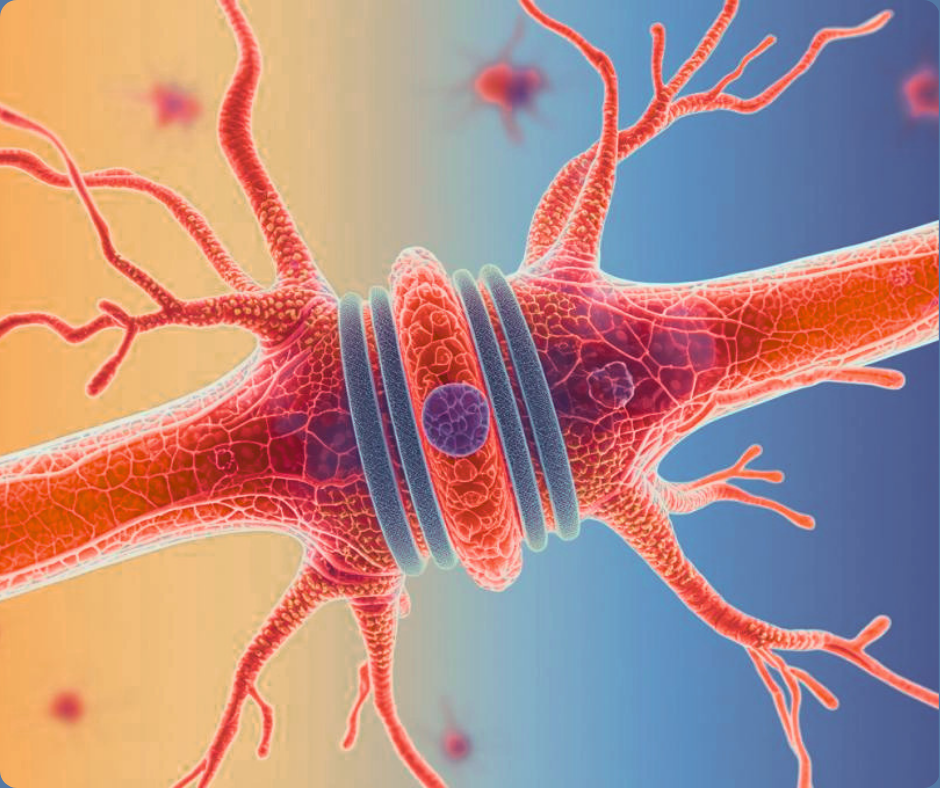
For the first time in over two decades, the FDA has approved a new class of pain medication. Vertex Pharmaceuticals' suzetrigine (Journavx), a selective NaV1.8 inhibitor, received approval in January 2025 for moderate-to-severe acute pain. The implications for the field extend well beyond a single molecule.
A Target Validated by Genetics and Pharmacology
NaV1.8 has been on the radar of pain researchers for years. The voltage-gated sodium channel is selectively expressed in peripheral pain-sensing neurons, with minimal CNS presence. In principle, that profile should decouple analgesia from the sedation, dependence, and cognitive effects that limit opioids and many centrally-acting agents. What made suzetrigine different from earlier sodium channel programs was selectivity: more than 31,000-fold over all other NaV subtypes and 180 additional molecular targets (Bhatt et al., 2024, J Pharmacol Exp Ther).
The mechanism is also novel. Suzetrigine binds to the second voltage-sensing domain (VSD2) of NaV1.8, stabilizing the channel's closed state through an allosteric mechanism rather than pore block. This translates to tonic inhibition of pain signaling in human dorsal root ganglion neurons, without the use-dependent effects that complicated earlier sodium channel programs.
What This Signals for the Preclinical Pipeline
Journavx's approval does more than add one drug to the formulary. It validates a preclinical-to-clinical pathway for peripheral sodium channel targets that the industry has been chasing since the discovery of NaV1.7 loss-of-function mutations in congenital insensitivity to pain. That earlier NaV1.7 story, genetically compelling but pharmacologically difficult, taught the field hard lessons about selectivity, isoform-specific pharmacology, and the gap between target validation and drugability.
Now, with NaV1.8 clinically validated, several questions become immediately relevant for preclinical programs:
Model selection matters more than ever. Suzetrigine's Phase 3 data showed efficacy in acute postoperative pain (abdominoplasty, bunionectomy). Vertex is now expanding into chronic indications, including diabetic peripheral neuropathy. Each of these pain states involves different peripheral nerve pathologies, different sensitization mechanisms, and different translational risks. The preclinical models used to evaluate the next generation of NaV1.8 and NaV1.7 modulators will need to capture these distinctions.
Electrophysiology endpoints are gaining importance. Suzetrigine's mechanism was characterized through electrophysiology in recombinant systems and primary human DRG neurons. For preclinical CROs and sponsors, the ability to measure sensory nerve conduction velocity (SNCV), compound muscle action potentials (cMAP), and sensory nerve action potentials (SNAP) in translational species, not just rodents, will be increasingly relevant as the next wave of ion channel programs enters IND-enabling studies.
The bar for non-opioid analgesics is now set. Journavx demonstrated pain management enabling opioid-free recovery in over 90% of patients in a recent Phase 4 aesthetic surgery study. Future non-opioid candidates will be benchmarked against this standard, which places greater pressure on preclinical programs to demonstrate robust, clinically predictive efficacy.
The Broader Landscape
Suzetrigine is not alone. Lexicon Pharmaceuticals recently completed an end-of-Phase 2 FDA meeting for pilavapadin in diabetic peripheral neuropathic pain. Researchers at Virginia Tech have demonstrated erasure of established chronic pain behaviors by targeting an enzyme system that amplifies pain signaling. A Penn Medicine team is exploring gene therapy approaches to NaV1.7 with an engineered "switch" for non-addictive pain relief.
The field is moving toward peripheral targets that demand translational models capable of capturing the relevant neurobiology. The NaV1.8 era has arrived. The question for the next wave of pain programs is whether the preclinical toolkit is ready for it.
MD Biosciences provides neuroscience discovery services including translational pain models with electrophysiology endpoints across multiple species. For questions about study design for ion channel or non-opioid pain programs, contact neuro@mdbiosciences.com.